Renting a car in Norway: fjords, ferries and the most beautiful routes
Some buttons on this page link to vrooem.com, where you compare and book the offer of international rental companies. Our guides are written independently.
The dream: your car, the fjords and an open road
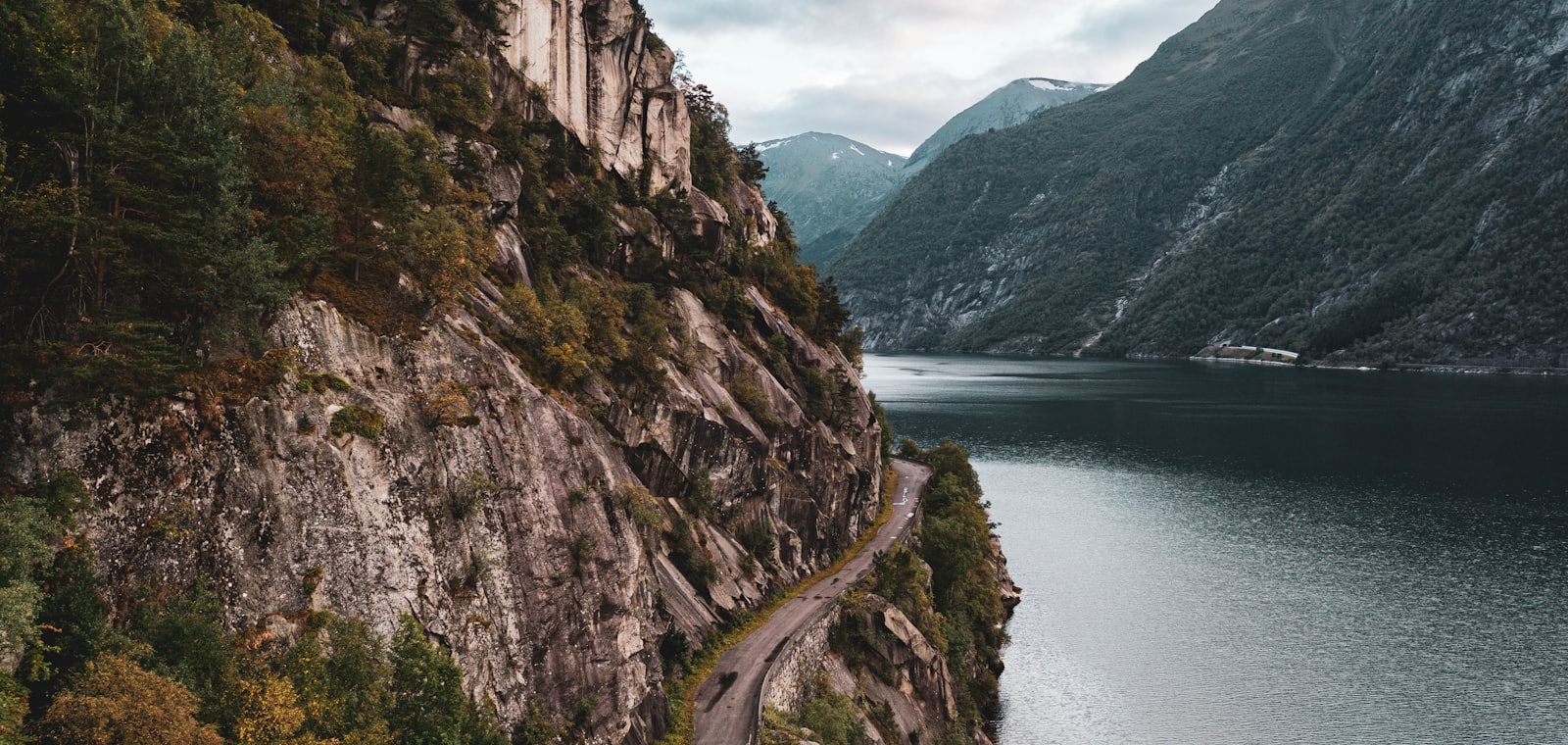
Picture this: it is early morning, mist still hangs low over the water, and you roll your rental car down a winding road towards a fjord that stretches between rock walls kilometres high. No train timetable forcing your hand, no bus that has already left. Just you, the steering wheel and a country that feels built for the road trip. Norway does something to people who love to drive themselves, and that feeling often begins right at the baggage carousel at the airport.
For many travelers, Norway is the ultimate driving adventure that sits just outside the comfort zone. The distances look vast, the road network feels exotic with its ferries and undersea tunnels, and the prices scare some people off. But that is exactly why it pays to prepare well. Anyone who understands how the system works drives relaxed past waterfalls, hairpin roads and fishing villages you would otherwise only know from a postcard.
This guide takes you through everything you need to know when renting a car in Norway: from choosing the right airport to the riddle of the toll, from ferries that are simply part of the road network to three concrete routes that will make your heart beat faster. No dry list, just real travel value. Ready? Then let us start the engine.
Why a car in Norway is almost indispensable
Norway has excellent trains and buses between the big cities, but the moment you head into the fjords, public transport thins out. Villages lie far apart, buses sometimes run only a few times a day, and the most beautiful spots happen to be exactly where there is no station. If you want to photograph a waterfall in the morning without other tourists, you need to be able to get there before the first coach arrives. That only works with your own car.
A car also gives you the freedom to change your plans. The weather in the fjords can shift quickly, and anyone who stays flexible can chase the sun or wait out a shower over a warm cup of coffee. With public transport you are tied to departure times that know nothing about clouds. With a car you decide where you stop, how long you stay and which side road you take because the view called you.
Finally, driving in Norway is an experience in itself. Here the road is not a means of getting somewhere, but often the highlight itself. National tourist routes wind past viewpoints built specially for travellers. You largely miss that from a bus seat.
Airports and regions: where do you start your journey?
The airport you choose strongly determines which fjords and landscapes are within reach. Many travelers fly into Oslo, on a direct service or with a connection, and continue from there. For the real fjord experience, Bergen is often the smartest gateway.
| Airport | Strong for | Character |
|---|---|---|
| Oslo (OSL) | Starting point for the south and east, wide choice of rental companies | Capital, furthest from the big fjords |
| Bergen (BGO) | Gateway to the fjords (Hardanger, Sogne) | Atmospheric harbour city, ideal starting point |
| Ålesund (AES) | Geirangerfjord, Atlantic Ocean Road, Trollstigen | Art Nouveau town, central in fjord country |
| Tromsø (TOS) | The far north, northern lights, gateway towards Lofoten | Arctic, the winter destination par excellence |
For many travellers Bergen is the golden mean: a charming city to start from, with the best-known fjords within driving distance. If you want to discover the north and the Lofoten Islands, then Tromsø or a flight to the north makes more sense, although that is a very different trip from the classic southern fjord route. If you combine two regions, consider a one-way rental, but expect a drop-off fee.
Ferries: simply part of the road
This surprises many travelers: in Norway, car ferries are not an excursion but a perfectly ordinary part of the road network. On countless routes the road simply ends at the water, and a ferry takes you and your car to the other side. It belongs there just as much as a roundabout or a tunnel. Do not underestimate this when planning: a ferry crossing can be a short fifteen-minute hop or a longer sailing that shapes your day.
In practice it usually works astonishingly simply. You drive to the landing, join the back of the queue and wait until you are allowed on board. On many routes you do not need to book in advance; you pay automatically, often via the same electronic system as the toll (AutoPASS), with your rental car’s number plate being scanned. On some busy or tourist routes, certainly in high season, booking is advisable so you do not miss a departure.
So factor in sailing times and possible waiting time realistically. A route that looks short on the map can actually take longer because you have to catch a ferry that only sails once an hour. Check the timetable of the routes on your itinerary in advance, because outside high season departures can be scarcer.
Toll: AutoPASS, cameras and the Portugal trap
Norway charges toll on many motorways, bridges, tunnels and on the approach roads to cities. The system is called AutoPASS and is fully electronic and barrier-free. You simply drive through: cameras read your number plate, there are no toll booths, and you do not have to stop anywhere or have coins ready. Handy, but that is exactly where a catch hides for anyone renting a car.
Because you never pay physically anywhere, you do not see the costs straight away. Rental cars are usually registered with the toll system, and the rental company settles the toll you passed afterwards, usually with an administrative service charge on top of the toll itself. That is exactly the same trap as in Portugal with its electronic toll roads: the toll itself is often modest, but the service charge per day or per transaction can add up considerably.
So ask about this explicitly when picking up your car. How is the toll settled? Is there a service charge, and is it per day or per passage? Sometimes there is a more favourable daily flat rate. By knowing this in advance, you avoid an unpleasant surprise on your credit card statement weeks after your trip.
| Topic | How it works | What you do |
|---|---|---|
| Toll (AutoPASS) | Cameras read the plate, no toll booths | Ask the rental company how it is settled and with which service charge |
| Ferries | Often queue up, pay automatically via plate | Plan in sailing times, book on busy routes |
| Tunnels and bridges | Many of them are priced via AutoPASS | Factor them into your toll expectation |
Tunnels: long, dark and sometimes below the seabed
Norway is a land of tunnels, and some are downright impressive. Because of the mountainous geography there are countless long tunnels, and in several places you even dive under a fjord or sea arm through an undersea tunnel that first descends steeply and then climbs again. For anyone not used to it, that can take some getting used to, but it is completely normal traffic.
A few practical points: always turn on your lights in tunnels, even during the day, because it is mandatory and simply sensible. Keep enough distance, as long tunnels can distort your sense of space. Some tunnels have illuminated cave-like roundabouts inside or colourful sections, especially on tourist routes, but do not count on every tunnel being comfortably lit.
Driving in Norway: taking it easy wins
The most important thing to remember: in Norway you drive more slowly than you are used to, and enforcement is strict. The speed limits are relatively low, even on roads that look wide, and the fines for speeding are known to be hefty. So do not be tempted by an empty, broad road. Stick to the signs and drive relaxed.
In addition, many fjord roads are narrow and winding, sometimes with passing places where oncoming traffic lets each other by. That calls for patience and courtesy. Wildlife is a real point of attention: in certain regions moose, reindeer or sheep suddenly cross the road, especially at dusk. Reduce speed where you see warning signs.
Finally, a manual car in mountainous terrain with lots of ascents and descents is tiring for anyone not used to it. If in doubt, read our guide on automatic or manual rental before you book. In the fjords, with their steep slopes, an automatic makes driving a lot more relaxing.
Electric driving: Norway is the world champion
If there is one country where renting an EV can truly make sense, it is Norway. The country leads the world in electric driving, and the charging infrastructure is exceptionally well developed, right into surprisingly remote corners. You will find fast chargers along main routes, and charging feels far less of a worry there than in many other countries.
An electric rental car can also work out cheaper, because electricity is generally cheaper than fuel and EVs sometimes enjoy toll benefits. For a country where everything is expensive, every saving counts. If you want to consider this, ask about the models when booking and whether charging cards or apps are included.
There is one point of attention: range drops in the cold and in mountainous terrain. If you climb a lot or travel in winter, you will get fewer kilometres out of a full battery than on paper. So plan your charging stops with some margin, certainly on long days between the fjords. With a little forward thinking, electric driving in Norway is a pleasure rather than a hassle.
Three routes to dream about
Below are three concrete route ideas, each with its own character. The time indications are guidelines; sailing times, weather and stops can stretch your days considerably, so plan generously.
Route 1: Bergen, the great fjords and Geiranger
This is the classic. You start in Bergen and drive into the heart of fjord country. Count on roughly five days to a week to do this at a relaxed pace, depending on how much you want to see.
- Day 1 to 2: From Bergen towards the Hardangerfjord, famous for its fruit orchards and waterfalls. Stop at viewpoints and enjoy the quiet pace.
- Day 3 to 4: On to the mighty Sognefjord, the longest and deepest in Norway, with side arms such as the narrow Nærøyfjord, which is on the World Heritage list.
- Day 5 onwards: Climb to Geiranger, where the Geirangerfjord squeezes between steep walls with waterfalls. The road there is spectacular in itself.
Along the way you will almost certainly take a few ferries. Plan them in and enjoy them; the crossing itself gives you the most beautiful view of the fjord.
Route 2: Atlantic Ocean Road and Trollstigen
For those who love iconic roads. This route revolves around two famous stretches of asphalt and lies more centrally, with Ålesund as a handy base. A long weekend to a few days is enough for the core, but more time pays off.
- The Atlantic Ocean Road: a short but legendary road that hops over bridges from islet to islet, just above the ocean. In rough weather the waves pound against the coast; when calm it is serene.
- Trollstigen: a hairpin road that winds up in sharp bends alongside a waterfall. Note: mountain passes like this are generally only open in the summer season. Check the status before you go.
- Ålesund itself: worth half a day, with its Art Nouveau architecture and the view from the town mountain.
Route 3: The Lofoten Islands in the far north
A completely different world. The Lofoten archipelago lies far to the north and offers sharp mountain peaks rising straight out of the sea, white beaches and red fishing huts. This is not an extension of the southern route, but a separate trip, often from a northern airport. Count on several days for the islands alone.
- Drive along the island chain over bridges and tunnels, passing fishing villages such as Reine and Hamnøy, which are among the most photographed places in Norway.
- In summer you enjoy the midnight sun here; in winter you have a chance of the northern lights, although driving is then more demanding.
- Bear in mind that the weather here is fickle. Plan in margin and do not rush through your days.
Season: summer or winter?
The season changes your Norway trip drastically. In summer the days are extremely long, up to the midnight sun in the north, and almost all mountain passes and tourist routes are open. This is the most comfortable season for a fjord road trip, with the most freedom of movement. It is also busier, so book ferries and accommodation at popular spots in good time.
Winter is breathtaking but demanding. Days are short, roads can be icy and mountain passes closed. Against that stands the chance of the northern lights and snow landscapes you will not soon forget. If you drive in winter, winter tyres are required and a car with four-wheel drive is no luxury in snowy regions.
| Season | Advantages | Points of attention |
|---|---|---|
| Summer | Long days, passes open, comfortable driving | Busier, book ferries and hotels in advance |
| Winter | Northern lights, snowy atmosphere, quieter | Short days, ice, passes closed, winter tyres or 4x4 needed |
Costs: count on an expensive country
Let us be honest: Norway is an expensive country, and you feel that during a road trip too. Car rental is generally higher there than in southern Europe, fuel is pricey, and ferries and tolls add up. That need not scare you off, but do count on it so your budget adds up. Exact amounts vary greatly by season, region and car type, so rely on an up-to-date price comparison rather than fixed figures.
Where you can save money: renting an EV can work out cheaper thanks to cheaper electricity and possible toll benefits. Travelling outside high season pushes down rental prices. And smart planning, so you do not take unnecessarily many ferries or expensive tunnels, helps too. Buying groceries and cooking instead of eating out every day lightens your daily budget considerably.
Before you leave, be sure to read our 12 tips for renting a car abroad, because many of them will also help you save money and hassle in Norway.
Insurance, deposit and the practical matters
As elsewhere, a Norwegian rental car comes with standard insurance with an excess, often a substantial amount that is blocked as a deposit on your credit card. Understand clearly what you are covered for and what not, because damage to the underside, tyres or windows sometimes falls outside the basic cover. On narrow mountain roads and gravel stretches, that is not a needless consideration.
Before you leave, dive into excess and deposit, so you know whether an excess waiver or a separate excess insurance is worth it for you. A separate insurance through a third party is often cheaper than the waiver at the desk, but in that case arrange it in advance.
A few more practical points:
- Fuel and charging: note whether you have to return the tank full or empty and which regime applies. For an EV: ask whether charging cards or an app are included.
- Parking: in cities like Oslo and Bergen, parking is paid and sometimes scarce. Outside the cities there are parking spaces at many attractions, sometimes paid.
- Driving licence and age: an EU or EEA licence is accepted as is; travelers from elsewhere should carry their national licence and, if it is not in the Latin alphabet, an International Driving Permit alongside it. Keep in mind a possible young-driver surcharge and a credit card in the name of the main driver for the deposit.
Common mistakes
A few pitfalls that travellers consistently fall into, so you can avoid them:
- Ignoring the toll service charge. Not asking how AutoPASS is settled and getting a fright at the invoice weeks later. Ask in advance.
- Planning too tightly around ferries. A missed departure can break your day. Factor in sailing times and waiting time generously.
- Driving too fast. The limits are low and enforcement is strict. Adjust your pace, even on empty roads.
- Not checking mountain passes. Driving to a closed pass in low season and having to rework your route.
- Underestimating distances and time. Short on the map, long in reality due to bends, tunnels and ferries.
- Renting manual without experience in the mountains. On steep fjord roads that can be harder than expected.
Frequently asked questions
Do I really need a car in Norway?
Not for the cities, but for the fjords and the countryside, yes. Public transport is limited outside the big cities, and you reach the most beautiful spots most comfortably and flexibly with your own car. If you want to travel freely past fjords, waterfalls and viewpoints, a rental car is virtually indispensable.
What about the toll for a rental car?
Norway uses AutoPASS, an electronic and barrier-free toll system with cameras, so you do not pay anywhere on the spot. Rental cars are usually registered, and the rental company settles the toll with you afterwards, often with a service charge on top. Ask exactly how this works when picking up the car to avoid surprises.
Do I have to book ferries in advance?
On many routes no: you simply queue up and pay automatically, often via your number plate. On busy or tourist routes, certainly in high season, booking is advisable so you do not risk missing a departure. Always check the timetable, because outside the season some ferries sail less often.
Is an electric car a good idea in Norway?
Often yes. Norway has one of the best charging networks in the world, and an EV can be cheaper thanks to cheaper electricity and possible toll benefits. Do bear in mind a smaller range in the cold and mountainous terrain, and plan your charging stops with some margin, certainly on long days.
When is the best time to go to Norway for a road trip?
Summer is the most comfortable: long days, open mountain passes and the most freedom, although it is busier. Winter offers northern lights and a snowy atmosphere, but calls for winter tyres, careful driving and accepting that many passes are closed. For a first fjord trip, summer is generally the safest choice.
Are winter tyres or four-wheel drive mandatory?
In wintry conditions suitable winter tyres are required, and a rental car in that period is normally equipped for it. Four-wheel drive is not always mandatory, but in snowy or mountainous regions it is pleasant and safer. If you only drive in summer, this barely comes into play.
Is driving in the long tunnels scary?
You get used to it quickly. Turn on your lights, keep your distance and drive calmly, and even the long and undersea tunnels are quite manageable. If you feel unsure, look up in advance which tunnels are on your route so you know what to expect. For most travellers they soon simply become part of the adventure.
How expensive is a road trip through Norway?
Count on a budget on the high side: rental, fuel, ferries and toll add up, and the country is pricey anyway. Exact amounts depend on season, region and car type, so compare current prices. You can save by travelling outside high season, considering an EV and cooking for yourself instead of eating out.
Ready to compare?
Compare the prices of international rental companies in a few taps and book with peace of mind.
See the offer on Vrooem