Renting a car in Austria: vignette, winter tyres and the Alps
Some buttons on this page link to vrooem.com, where you compare and book the offer of international rental companies. Our guides are written independently.
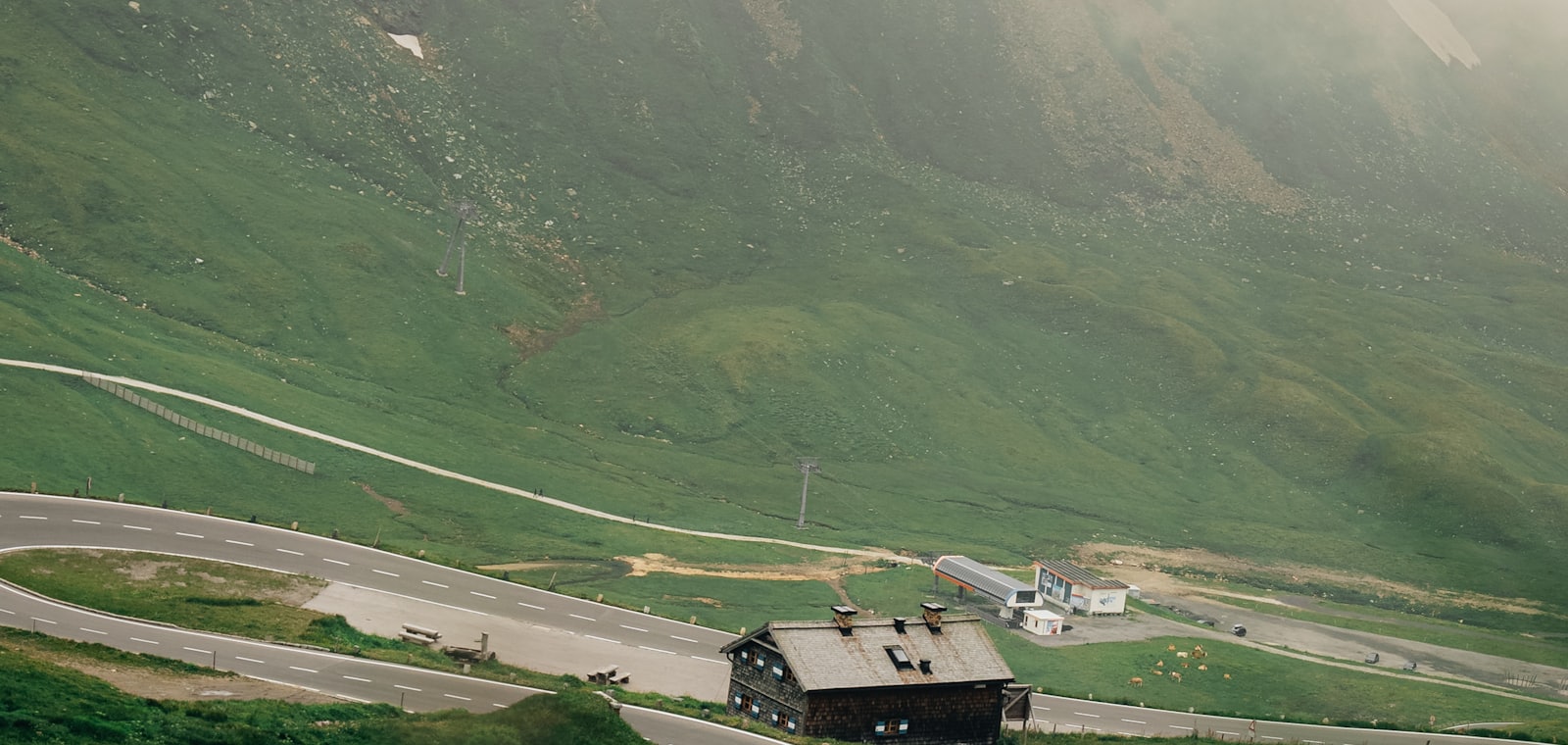
Winter often begins before you even see the mountains. You drive south, somewhere past Munich the landscape starts to roll, and suddenly the first snow-capped peaks appear on the horizon. For many travelers, Austria is the familiar winter sports country: Tyrol, Salzburgerland, Carinthia. But Austria is just as much a summer country, with alpine meadows, turquoise mountain lakes and panoramic roads that wind their way through the heights for kilometres on end.
Whether you drive your own car to the ski slopes or rent one locally for a summer tour, you will run into a few typically Austrian rules. The vignette for the motorways. The separate toll on mountain tunnels and alpine passes. And in winter, the situational obligation to drive with winter equipment. None of these things is complicated, but you do want to know about them before you set off, not when you are standing at a toll gate or caught in a snowstorm without winter tyres.
This guide walks you through it calmly: which airport suits your destination, exactly how the vignette and the maut work, what winter tyres mean for your rental car, and two fully worked-out route ideas for summer and winter.
Which airport should you choose for your road trip in Austria?
Short answer: it depends on your destination. For Tyrol and the western ski areas you land in Innsbruck, for Salzburgerland in Salzburg, for a city break plus the east in Vienna, and for Carinthia and the southern lakes in Klagenfurt.
Many travelers drive to Austria in their own car, certainly for winter sports. But for a summer tour or a short trip, flying plus renting locally is often more practical. The choice of airport determines how much mountain driving you are confronted with straight away.
| Airport | Code | Region | Ideal for |
|---|---|---|---|
| Innsbruck | INN | Tyrol | Skiing (Stubai, Zillertal, Sölden), summer alpine routes, close to the mountains |
| Salzburg | SZG | Salzburgerland | City of Salzburg, Zell am See, Großglockner, a mix of city and mountains |
| Vienna | VIE | Eastern Austria | City break, the Wachau wine region, the widest rental choice and often the lowest rates |
| Klagenfurt | KLU | Carinthia | Wörthersee, the southern lakes, a quieter and sunnier summer climate |
Vienna generally has the widest range of rental companies and the sharpest prices, but it lies far from the western mountains. Innsbruck sits right in the middle of the Alps, ideal if the mountains are your main goal, although the supply is smaller and heavily in demand during the ski season. In that case, book well in advance.
Do I need a vignette in Austria?
Yes, you need a vignette to drive on motorways and expressways in Austria. That is the compulsory toll sticker, now also available as a digital e-vignette, and it applies to the ordinary motorways. Mountain tunnels and some alpine passes fall outside this and have separate tolls (see further on).
Without a valid vignette you risk a replacement surcharge or a fine if you are checked. The Austrian road authority monitors with cameras and through road inspections, so this is not something to gamble on.
Classic vignette or e-vignette?
There are two forms. The classic vignette is a physical sticker that you stick on the inside of the windscreen. The e-vignette is digital and linked to your number plate, so no sticker is needed. Both come in different validity periods, typically a ten-day, a two-month and an annual variant.
Watch out for a catch with the e-vignette that surprises many people. Because of the European rules on the right of withdrawal for online purchases, an e-vignette bought online may only take effect after a statutory cooling-off period of a few days, unless you explicitly choose immediate validity. So if you buy an e-vignette online the evening before departure without ticking that option, you may not be covered straight away. Buy well in advance, tick the immediate-start option, or buy a physical vignette at a sales point.
And with a rental car?
Here is some good news for anyone renting locally or just across the border. An Austrian rental car almost always already has a valid annual vignette, because it drives in the country all year round. Still, do check this, especially if you rent in Germany or Italy and cross the border: ask at pick-up or look to see whether there is a sticker on the windscreen.
What is the maut and why is it not the same as the vignette?
The maut is the separate toll you pay for specific mountain tunnels and panoramic roads, distinct from the vignette. Your vignette covers the ordinary motorways, but certain expensive infrastructure in the mountains is paid for separately per crossing.
This is a common misunderstanding. People think: I have a vignette, so everything is sorted. But for the big tunnels and the spectacular high-altitude roads you settle up separately each time, often at a toll gate or in advance online.
| Route | Type | What it is |
|---|---|---|
| Brenner Tunnel / Brenner motorway | Motorway with separate toll | Major north-south axis towards Italy, separate toll on top of the vignette |
| Großglockner High Alpine Road | Panoramic road | Famous alpine road with a toll gate, open only in the summer season |
| Felbertauern, Tauern, Arlberg tunnels | Mountain tunnels | Separate toll per crossing depending on the tunnel |
| Gerlospass, Silvretta High Alpine Road | Alpine passes | Some have a toll, others are free |
The exact rates differ per route and change annually, so do not count on a fixed amount. Check the current price just before your trip on the official site of the road in question. Many panoramic roads are also seasonal: the Großglockner High Alpine Road, for example, is only open in the summer months and closes in winter.
Do I need winter tyres in Austria?
In Austria there is a situational winter equipment requirement: in wintry conditions (snow, ice, black ice) your passenger car must be fitted with suitable winter equipment. So it is not a strict calendar rule, but tied to the condition of the road.
In practice this means that in winter weather you either drive on winter tyres, or on summer tyres with snow chains on a snow-covered or icy road surface. In practice, during the ski season you simply choose winter tyres, because that is by far the safest and most practical option in the mountains.
Winter tyres with a rental car
If you rent a car in Austria during the winter season, winter tyres are almost always fitted as standard. Even so, there are two things to watch out for:
- Winter surcharge. Some rental companies charge a separate fee for winter tyres or for the winter package, often per day or per rental. Ask about this in advance so it does not surprise you at the desk.
- Snow chains. For some high ski areas or in heavy snowfall, snow chains may be compulsory or recommended. They are not always included in the car as standard. Ask whether you can rent them as well and whether someone can briefly explain how to fit them.
Your own car or renting locally?
No single answer is right for everyone, but the rule of thumb is: for winter sports with lots of luggage and the whole family, your own car is often the more logical choice; for a short or summer trip, flying plus renting is usually more convenient and sometimes cheaper.
With your own car you have everything with you, no rental costs, no deposit, and you are used to your car in the snow. Downsides: a long drive of many hours from much of northern and western Europe, tolls along the way that are free in Germany but not in Austria and possibly Switzerland, and wear plus kilometres on your own car.
Renting locally saves you the long drive and the fatigue, and you can choose a car that suits the terrain (four-wheel drive for the mountains, for example). Downsides: rental costs, a deposit on your credit card, a winter surcharge, and you drive an unfamiliar car on narrow mountain roads.
| Factor | Own car | Renting locally |
|---|---|---|
| Long journey beforehand | Yes, tiring with children | No, you fly |
| Luggage and ski equipment | Unlimited | Limited to the rental car’s boot |
| Costs | Fuel and tolls, no rental | Rental, deposit, winter surcharge |
| Car suited to the terrain | Whatever you have | Choice of 4x4, larger, etc. |
| Familiar with the car | Completely | Unfamiliar car |
For a typical ski holiday with the whole family and a mountain of luggage, your own car often wins on comfort and cost. For a couple wanting to drive a week of summer lakes and passes, flying to Klagenfurt or Innsbruck and renting a car there is often the finest and most relaxed option.
How do you drive safely on Austrian alpine roads?
In short: brake on the engine rather than on your brakes during long descents, give way to whoever is driving uphill on narrow sections, and watch out for postal buses that have priority. Mountain driving demands a different reflex than a flat motorway at home.
On a long descent you shift down to a lower gear so that the engine helps brake. If instead you keep your foot constantly on the brake pedal, your brakes can overheat and lose their grip, precisely at the moment you need them most. This applies to automatics too: put them in a lower or manual setting for the descent.
On narrow mountain roads where two cars can barely pass each other, the vehicle driving uphill usually has priority, because reversing downhill is safer than reversing uphill. And watch out for the yellow postal buses (Postbus): on narrow mountain routes they often have priority and signal their approach with a horn.
Parking, fuel and charging
In cities like Salzburg and Innsbruck there is often paid parking with a blue zone or a parking disc system. Watch the signs and, if in doubt, use a parking garage. In ski resorts there is usually valley parking with shuttle buses to the slopes.
You will find petrol stations easily along the main roads, but in remote mountain valleys they can be scarcer. Fill up in good time and do not let your tank run empty before you start a long stretch. For an electric rental car the same applies, with extra attention: charging points are available in the valleys and near larger towns, but plan your route around charging stops and bear in mind that climbing and cold significantly reduce your range.
Speed and alcohol
Stick to the signs: on most motorways the maximum may be lower than you are used to, and in villages and at roadworks enforcement is strict. The alcohol limit is low and the checks are strict, so do not drink if you still have to drive. Mountain roads and alcohol do not mix in any case.
Route idea 1: a summer alpine route around the Großglockner
This route is meant for summer, when the high passes are open. You combine the most spectacular mountain driving in Austria with the lake landscape around Zell am See. Count on a long but unforgettable day, or spread it calmly over two days.
- Morning. Set off from Zell am See or Salzburg. Drive towards the Großglockner High Alpine Road. From Salzburg, count on roughly one and a half to two hours to the start of the toll road, depending on traffic.
- Late morning to midday. The Großglockner High Alpine Road itself. Take plenty of time here, this is no road to rush. Stop at the viewpoints and possibly the glacier site at the end of the side road. Count on several hours including stops.
- Afternoon. Descent and return towards Zell am See. A quiet evening by the lake, perhaps a walk along the water or a refreshing dip.
Route idea 2: Tyrol with lakes and valleys
This route works both in summer and around a winter sports stay, with adjusted expectations in that case. You set off from Innsbruck and explore Lake Achensee and the Zillertal, two Tyrolean classics.
- Morning. Start in Innsbruck. Perhaps take a quick look at the old town centre with the Goldenes Dachl before you leave. Then drive towards the Achensee, the largest lake in Tyrol. Count on roughly three quarters of an hour to an hour of driving.
- Midday. Time at the Achensee: a boat trip, a walk along the shore or simply lunch with a view of the water. In winter you replace this with the slopes or a winter walk.
- Afternoon. Drive south into the Zillertal, a long valley full of mountain villages and, in winter, well-known ski areas. Explore part of the valley and return to Innsbruck in the afternoon, with a little margin for traffic in the ski season.
In the winter season you allow more time and take into account slower roads, snow clearing and crowds around the ski areas during the changeover of the holiday weeks. In that case, plan fewer kilometres and more buffer time.
Insurance, deposit, season and costs
As everywhere in Europe, a rental car comes with an excess and a deposit that is blocked on your credit card. Read up calmly in advance on how this works in our guide to the excess and deposit, so you are not caught out at the desk.
In the ski season a winter surcharge may be added, plus a higher base rate due to the high demand. So for winter sports, count on a more expensive rental than in a quiet period. For a summer tour the rates are on average lower, with the most expensive moments being the summer holidays and long weekends.
The seasons strongly determine what you can do. In winter everything revolves around snow, slopes and winter equipment, and the high passes are closed. In summer the panoramic roads and mountain lakes open, and you have a choice of countless tours. The shoulder seasons (late spring, early autumn) are quiet and beautiful, but in the mountains winter weather can still or already occur, so stay alert to the winter equipment requirement.
If you want a broader overview of the costs and pitfalls you can expect anywhere abroad, also read our 12 tips for renting a car abroad.
Common mistakes
- Thinking the vignette covers everything. The maut on tunnels and panoramic roads is paid separately. Take this into account in your budget and your timing.
- Buying an e-vignette online too late. Because of the cooling-off period it may only become valid after a few days. Buy well in advance or tick the immediate-start option.
- Assuming a rental car from a neighbouring country has an Austrian vignette. Check this if you rent in Germany or Italy and cross the border.
- Going to the winter sports with the wrong tyres. Poor-quality all-season tyres are not enough in real snow. Drive on good winter tyres and, if in doubt, take chains along.
- Planning too tightly on mountain roads. Distances in kilometres say little about the time. Narrow, winding roads take much more time than you think.
- Doing the descent on the brakes. Shift down and brake on the engine, otherwise you risk overheating your brakes.
Frequently asked questions
Do I need a vignette if I am just driving through Austria?
Yes. As soon as you use an Austrian motorway or expressway, you need a valid vignette, even for a short transit. There is a short-term variant (around ten days) that is sufficient for a transit or a short holiday.
Does my rental car already have a vignette?
A car rented in Austria almost always already has an annual vignette. If you rent in a neighbouring country and cross the border, that is not certain. Ask about it explicitly at pick-up and check the windscreen or the number-plate-linked e-vignette.
Are winter tyres legally compulsory in Austria?
There is a situational requirement: in wintry conditions you must have suitable winter equipment, so winter tyres or summer tyres with snow chains on a snow-covered road surface. In practice you are best off simply driving on winter tyres during the ski season.
What is the difference between the vignette and the maut?
The vignette covers the ordinary motorway network. The maut is a separate toll for specific mountain tunnels and panoramic roads such as the Brenner motorway or the Großglockner High Alpine Road. You pay this separately from the vignette, per crossing.
Which airport should I choose for winter sports in Tyrol?
Innsbruck (INN) is closest to the western ski areas such as the Stubaital, Zillertal and Sölden. Salzburg (SZG) is a good alternative for the Salzburgerland. Book your rental car early, because demand is high during the ski season.
Can I take my electric rental car into the mountains?
Yes, but plan carefully. Climbing and cold reduce your range considerably, and charging points are more numerous in the valleys than high in the mountains. Plan your charging stops in advance and set off with a generous buffer.
Is driving in Austria much different from driving at home?
The biggest differences are in the mountains: descending on the engine, priority for whoever is driving uphill on narrow sections, and an eye for postal buses. Beyond that, broadly comparable traffic rules apply, with strict speed and alcohol checks.
How does Austria differ from neighbouring countries such as Switzerland?
Both work with a form of motorway vignette, but the details differ. Switzerland, for instance, has an annual vignette as its basis. If you are planning a tour through both, also read our guide to renting a car in Switzerland, and for those driving via France our guide to driving to France.
Ready to compare?
Compare the prices of international rental companies in a few taps and book with peace of mind.
See the offer on Vrooem