Renting a car in the Canary Islands: Tenerife, Gran Canaria and more
Some buttons on this page link to vrooem.com, where you compare and book the offer of international rental companies. Our guides are written independently.
Seven volcanic islands off the coast of Morocco, in the middle of the Atlantic Ocean, yet administratively part of Spain and Europe. That, in a single sentence, is the appeal of the Canary Islands for anyone heading off in search of sun. The islands are a destination that can be pleasantly warm in January and where, in July, you are not guaranteed to melt away as you might on the Mediterranean. The islands lie so close to the equator that the seasons barely exist there: the sun is a year-round constant.
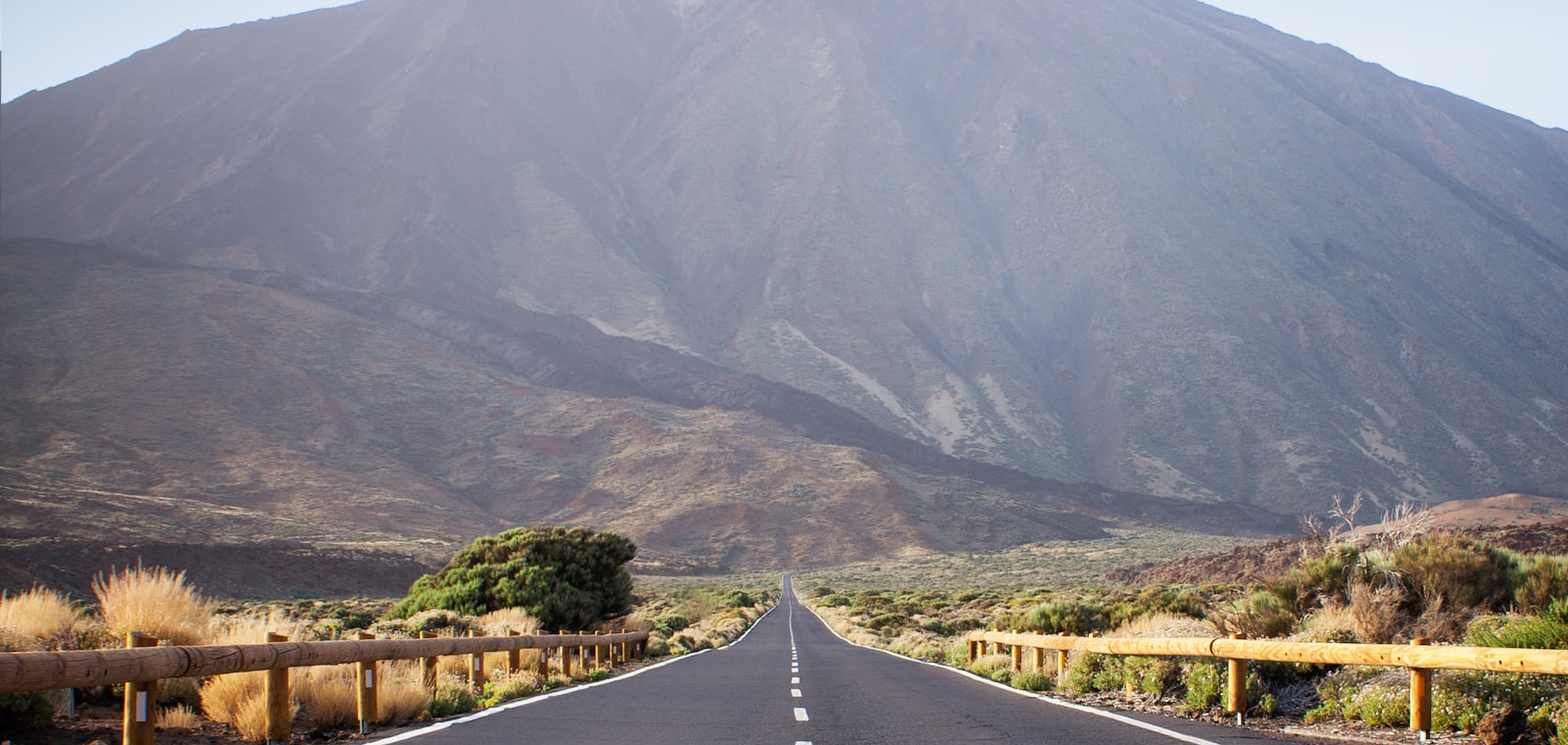
But the Canary Islands are far more than a beach destination. Tenerife is dominated by the Teide, at 3,715 metres the highest mountain in Spain, which you can approach via winding roads up into a lunar landscape above the clouds. In places Lanzarote looks like another celestial body, with black lava fields and vineyards that grow out of the ash. Gran Canaria is not called a continent in miniature for nothing: green mountain villages in the north, desert dunes in the south. Fuerteventura has endless beaches and a wind that draws surfers from everywhere.
To see all of that you need freedom, and on these islands freedom almost always means a rental car. In this guide you will read what to expect on each island, how driving the volcanic mountain roads feels, what to watch out for with the insurance and the deposit, and which two routes will give you an unforgettable holiday. Everything written directly to you, accurate and without invented prices.
Why should you rent a car in the Canary Islands?
Because public transport only takes you so far, and the most beautiful spots lie precisely beyond that point. The buses (on the Canary Islands they are often called guaguas) connect the major tourist towns and airports reasonably well, but they barely reach the volcanic landscapes, the remote bays and the mountain villages, or only after long transfers.
The geography of these islands is extreme. A drive from a seaside resort on the coast to a viewpoint at a thousand metres can take half an hour. Anyone who wants to see the Teide, explore the Anaga mountains or visit the La Geria vineyards on Lanzarote simply will not get far without their own transport. An organised excursion takes you to one highlight per day at a fixed time; with a rental car you set your own pace, leave early before the buses arrive and stay until the light turns soft.
On top of that, rental prices in the Canary Islands have been among the sharpest in Europe for years. Thanks to the strong competition and the special tax regime (more on that below), a car is often surprisingly affordable. For anyone staying more than two or three days, the rental price almost always pays for itself in the freedom you get in return.
On which island do you rent your car, and can you island-hop with it?
You rent your car on the island where you are staying, and that car stays on that island. Island-hopping is not something you do with your rental car but by ferry or domestic flight; at your destination you then rent a new vehicle if you wish. As a rule, rental companies do not allow you to take a car to another island.
The distances within a single island are very manageable. Even Tenerife, the largest island, can be driven from north to south in a couple of hours. That is why, for many travellers, it is most rewarding to concentrate your time on one or two islands rather than racing from island to island. The ferries between the islands (operated by Fred Olsen and Naviera Armas, among others) run frequently, and short domestic flights connect the airports, but every transfer costs time and money.
Below is an overview of the four most visited islands, their main airports and what you mainly come for.
| Island | Airport(s) | What you come for |
|---|---|---|
| Tenerife | Tenerife South (TFS), Tenerife North (TFN) | Teide National Park, Anaga mountains, varied coastline, widest choice of villages |
| Gran Canaria | Las Palmas (LPA) | Continent in miniature: green north, dunes in the south, mountainous interior |
| Lanzarote | Lanzarote (ACE) | Volcanic lunar landscape (Timanfaya), the art of César Manrique, the La Geria wine region |
| Fuerteventura | Fuerteventura (FUE) | Endless beaches, surf and kitesurf paradise, calm atmosphere |
For a first visit to the Canary Islands, Tenerife is the most complete choice thanks to its variety, followed by Gran Canaria. Lanzarote is a recommendation for anyone who loves unusual landscapes and design, Fuerteventura for the beach and surf lover.
Is it true that fuel is cheaper there and that there are no tolls?
Yes on both counts, although you should read it with the necessary nuance. There are no toll roads on the Canary Islands, so you pay nothing anywhere to keep driving. And fuel is generally cheaper than on the Spanish mainland, because the islands have their own, lower tax regime.
The Canary Islands fall outside the European Union’s VAT area and instead apply their own, lower indirect tax (the IGIC). As a result, the prices of fuel, alcohol and electronics, among other things, are often lower there than on the mainland. Do not count on filling up being dirt cheap in absolute terms, however: the international oil price still determines the lion’s share, and that fluctuates. Treat the pump price on the spot as a bonus, not as a given.
How do you drive safely over the volcanic mountain roads?
Calmly, attentively and using the engine. The mountain roads on the Canary Islands are often narrow, very twisty and run well above a thousand metres; mist, low clouds and strong wind can suddenly change visibility and grip. Anyone who drives calmly and with concentration here will actually enjoy the most beautiful stretches of the islands.
The Anaga mountains on Tenerife and the roads around the Teide are classic examples. In a short time you climb from the sunny coast to cooler, damper heights where a cloud cover can linger. At that altitude you sometimes literally drive in the clouds, with visibility of just a few dozen metres. Turn on your lights, reduce your speed and keep extra distance. On descents, change down and let the engine brake instead of constantly pressing the brake; this prevents overheated brakes.
Bear in mind that on narrow mountain lanes, oncoming traffic sometimes has to squeeze past and judge the gap. Give way, use the pull-in spots and give a short honk before blind bends if that is the local custom. The wind can tug at your car in gusts, especially on open highlands and on Fuerteventura and Lanzarote; hold the wheel firmly. Finally, plan your mountain drives in the morning where possible, when cloud formation is often still limited and the traffic quieter.
Do you have to rent from a big brand, or are local chains better?
Both can be perfectly fine. Alongside the well-known international chains there are strong Canarian rental companies that are often cheaper and well organised locally, but then you do have to look extra carefully at the insurance and the deposit. The Canary Islands are Spanish territory, so the same rules apply as in the rest of Spain.
Local chains such as Cicar and Autoreisen have a solid reputation on the islands and, with many of their rates, include broad cover as standard, sometimes even with no or a limited excess and without a large deposit block. That can make a big difference compared with some international providers that show a low base rate but pile a hefty excess and a high deposit on top of it. So always read carefully what is included in the price.
With the big international brands you know exactly what you are getting and you can easily compare via booking platforms, but watch out then for the separate costs for an additional driver, a child seat and the more expensive insurance modules at the counter. For a clear picture of how insurance, excess and deposit fit together, read our separate explanation of excess and deposit on a rental car. Because this is Spanish territory, the same points of attention apply as for renting a car in Spain.
| Type of rental company | Advantages | Points to watch |
|---|---|---|
| International chains | Familiar, easy to compare, counters everywhere | Often higher excess and deposit, expensive separate options |
| Canarian chains (e.g. Cicar, Autoreisen) | Often cheaper, sometimes broad cover included, locally strong | Less well known, check cover and deposit carefully |
| Online broker/comparison site | Sharp total price, overview | Read the fine print of the actual rental company |
What do you need to know about parking, fuelling and documents?
Your driving licence is usually sufficient, you generally fuel up yourself, and parking in the cities often takes place in paid blue zones. With that in mind you are well prepared for the practical side of your trip.
Drivers with a valid EU or EEA driving licence can drive in the Canary Islands on their home licence without an International Driving Permit. Travelers from outside the EU usually need an International Driving Permit alongside their national licence, so check your own country’s requirements before you travel. In addition, bring your identity card or passport and the credit card in the name of the main driver, because you will almost always need it for the deposit. Many rental companies apply a minimum age and a minimum period for which you must already have held your licence; young drivers sometimes pay a surcharge.
In the cities and larger resorts you will find paid parking zones, often marked with blue lines on the road surface (the zona azul). You buy a ticket at the machine and place it visibly behind the windscreen. Outside the centres and in many villages you can usually park along the road for free, but always watch out for signs and yellow lines, which indicate a parking ban. At most stations you fuel up yourself; sometimes there is an attendant. Preferably fill up during the day and bear in mind that stations in remote mountain areas can be scarce, so never head into the mountains with an almost empty tank.
Route idea 1: Tenerife in a few days
Thanks to its variety, Tenerife is ideal for a first exploration by car. The following daily schedule is a suggestion; the times are generous, because stops often run longer than planned and mountain traffic is unpredictable.
Day 1, Teide National Park. Leave early, ideally around 8 a.m., heading up from the coast. Reckon on about an hour and a half to two hours’ driving from the south, with viewpoints along the way. Above the clouds you walk along short trails through the volcanic landscape. Anyone who wants to take the cable car up is best off leaving early to beat the crowds. In the afternoon you descend calmly, engine-braking through the bends.
Day 2, Anaga mountains and north coast. Set aside a full day for the green, misty Anaga in the northeast. The roads are narrow and twisty there; take your time. Combine a laurel-forest walk with a visit to a coastal village such as Taganana and a refreshing stop at a natural bay. Allow for several hours of net driving time due to the slow pace on the mountain lanes.
Day 3, coastal villages and relaxing. A quieter day along the coast. Drive to a few fishing villages, fit in a long lunch and enjoy a beach or a natural pool. That way, alongside the intense mountain days, you also get some relaxation.
Route idea 2: Lanzarote in a few days
Lanzarote is more compact than Tenerife and revolves around volcanism, wine and the art of César Manrique, who helped shape the entire island. Here too the times are generously hedged.
Day 1, Timanfaya National Park. The lunar landscape of the Fire Mountains is the island’s showpiece. You explore the park in a regulated way (parts are only accessible via an organised route in order to protect the environment); leave early, because it gets busy. From most accommodations reckon on half an hour to an hour’s drive to the entrance.
Day 2, Manrique art and the north. Devote a day to the works of César Manrique, including his attractions in the north of the island. The distances are small, so you can combine several spots in one day with enough time to really look around.
Day 3, La Geria and the coast. Drive through the La Geria wine region, where the grapes grow in pits in the black ash, protected from the wind by crescent-shaped little walls. Stop for a tasting (without tasting, of course, if you are the one driving) and finish at a coastal town. For anyone who prefers to explore the interior of a larger island, the mountainous heart of Gran Canaria makes a fine alternative for this third day.
What about insurance, deposit, season and costs?
The car is usually available and affordable all year round, but your real risk lies in the excess and the deposit, not in the base rate. That is where you should focus your attention.
A rental car comes as standard with statutory liability insurance and usually a basic cover for damage and theft with an excess. That excess can run high, and the rental company often blocks a deposit on your credit card at pick-up to the amount of that sum. You can buy off the excess, either at the counter (often expensive) or in advance through a separate excess waiver insurance from an independent provider (often cheaper). How exactly that works and what is sensible, you can read in our explanation of excess and deposit on a rental car.
As for the season, the Canary Islands are special: thanks to the mild climate it is holiday season there all year round. Even so, there are price peaks, especially around the main school holidays (Christmas, the spring break, Easter, summer) and in the winter weeks when many northern Europeans flee the cold. Anyone who travels outside those peaks and books in time generally finds the sharpest rates. We deliberately do not name concrete amounts, because they fluctuate strongly by period, island and vehicle class; always compare current prices. A handy overview of the best time to book can be found in our article on when renting a car is cheapest, and general savings are in our 12 tips for renting a car abroad.
Common mistakes
A few pitfalls keep coming back for those driving on the islands for the first time. Keep these in mind and you will avoid most of the frustration.
- Looking only at the base rate. The lowest price on a comparison site means little if the excess and the deposit are high. Always work out the total costs including cover.
- Underestimating the mountain roads. Anyone used to flat driving misjudges the time that narrow, twisty mountain roads take. Plan generously and drive with the engine on the descents.
- Heading into the mountains with an empty tank. In remote areas, petrol stations are scarce. Fill up in time in a larger village or town.
- Wanting to take the car to another island. As a rule, that is not allowed. Plan island-hopping by ferry or flight and rent again on the spot.
- Not taking photos at pick-up. Without proof of existing damage you have a weak position at return. Take photos all the way round and record the fuel level.
- Ignoring parking rules. Overlooking a blue zone or a yellow line can earn you a fine. Buy a ticket where you have to.
Frequently asked questions
Do I need an international driving permit in the Canary Islands?
It depends on where your licence is from. With a valid EU or EEA driving licence you may simply drive there, because the Canary Islands are Spanish territory and fall within the European rules. Travelers from outside the EU usually need an International Driving Permit in addition to their national licence, so check your own country’s requirements before you travel. Either way, bring your identity card or passport and a credit card in the name of the main driver.
Can I take my rental car to another island?
As a rule, no. Rental companies do not allow you to take their car to another island by ferry. If you want to see several islands, take the ferry or a domestic flight and rent another vehicle at your new destination if you wish.
Are there toll roads in the Canary Islands?
No, there are no toll roads. You drive everywhere without paying tolls. Do bear in mind paid parking in cities and larger resorts, often via the blue zones.
Is fuelling up really cheaper there than on the mainland?
Generally yes. Thanks to the islands’ own, lower tax regime (the IGIC instead of Spanish VAT), fuel is often cheaper there than on the Spanish mainland. The international oil price remains decisive, however, so treat it as a bonus rather than a fixed, guaranteed discount.
Which island is best for renting a car for the first time?
For a first visit, Tenerife is the most complete choice thanks to its great variety between the Teide high mountains, the green Anaga and the coastal villages. Gran Canaria is a strong second with its mix of green north and southern dunes. For unusual landscapes choose Lanzarote, for beaches and surf Fuerteventura.
Are the mountain roads dangerous?
They demand attention, but are quite manageable if you drive calmly. The roads are often narrow and twisty, and at altitude you can end up in mist or clouds. Reduce your speed, use your lights, keep your distance and let the engine brake on descents. Preferably plan mountain drives in the morning.
Should I rent from a big international brand or a local chain?
Both are possible. Local Canarian chains are often cheaper and sometimes include broad cover, while international brands are familiar and easy to compare. Whatever you choose, always check the excess and the deposit carefully before you book.
When is the season to drive here?
All year round, because the climate is mild in every season. Prices are highest around the main school holidays and in the busy winter weeks, though. If you travel outside those and book in time, you will generally find the sharpest rates.
Ready to compare?
Compare the prices of international rental companies in a few taps and book with peace of mind.
See the offer on Vrooem