Renting a car in Italy: ZTL zones, tolls and rental pitfalls
Some buttons on this page link to vrooem.com, where you compare and book the offer of international rental companies. Our guides are written independently.
There is a reason why Italy has been the dream destination of everyone who loves to drive for generations. The hills of Tuscany rising gently towards a distant village with a tower on top. The coast road along Amalfi where the sea drops four hundred metres on your right. The hairpins of the Dolomites that wind their way between the rock faces. No train or bus will take you there as freely as your own car.
But Italy is also the country where travelers most often come home to an unexpected letter in the post. A fine for a zone they never noticed, a centre they should never have driven into, a toll lane where they accidentally picked the wrong line. Those letters arrive weeks or months later, often with a service charge from the rental company on top. Not because Italy is out to get you, but because the rules work differently than at home and the signs are small.
This guide takes you through everything you really need to know: where a rental car is worth its weight in gold and where it is mostly a ball and chain, how to spot and avoid the notorious ZTL zones, how tolls on the autostrada work, and two routes that bring the whole picture together. Plain-spoken, honest, and without scaring you. Because with a little preparation, driving in Italy is exactly as beautiful as you imagine it.
Why rent a car in Italy?
Because the most beautiful parts of Italy simply cannot be reached, or barely, by public transport. The countryside, the mountains and the coast only truly open up to those who get behind the wheel themselves.
Think of Tuscany: the vineyards around Montepulciano, the cypress-lined lanes of the Val d’Orcia, an agriturismo at the end of a gravel road. No bus goes there, and if one does, it runs twice a day. Think of the Dolomites, where every bend offers a different view and you can string together three mountain passes in a single morning. Think of Sicily or Puglia, where the distances are vast and the villages lie far apart. In all those cases a car gives you a freedom that no other form of transport can buy.
Where you really do not want a car is in the large historic city centres. Florence, Rome, Bologna, Naples, Milan: these are places where your car becomes a burden. Parking is expensive and scarce, the traffic is dense, and on top of that the loveliest old towns are full of ZTL zones that you, as a tourist, are not allowed to enter. The golden formula for most travelers is therefore: fly or travel to the city, explore it on foot and by public transport, and only rent the car when you head out into the countryside or along the coast. Often you literally pick up the car at the edge of the region and drop it off there again.
Which airport should you choose as a starting point?
That depends entirely on which region you want to explore. Italy is long and fragmented, so the right airport can save you hours of driving on the first day.
Below are the main airports with car rental and the regions they make a logical starting point for. There are direct flights to most of these destinations from major European hubs.
| Airport | Code | Best starting point for |
|---|---|---|
| Rome Fiumicino | FCO | Lazio, southern Tuscany, towards Umbria |
| Milan (Malpensa / Linate / Bergamo) | MXP / LIN / BGY | Lake Como, Piedmont, Dolomites, Lake Garda |
| Pisa | PSA | Tuscany (shortest route to Florence and the hills) |
| Naples | NAP | Amalfi Coast, Cilento, Pompeii |
| Catania | CTA | Eastern and southern Sicily, Etna, Taormina |
| Bari | BRI | Puglia, the trulli, the heel of the boot |
| Venice | VCE | Veneto, eastern Dolomites, eastern Lake Garda |
For a Tuscany road trip, Pisa is usually handier than Rome, even though Rome sounds more familiar. For the Amalfi Coast, Naples is the natural departure point, although you do then drive straight into the busy traffic around Naples. Bear in mind that picking up the car at an airport is often slightly more expensive than in the city, due to airport surcharges. Heading for Puglia? Read our guide to car hire at Bari airport.
Rental companies at the airports. In a search on 6 October 2026, Vrooem offered Locauto, the Italian rental company founded in 1979, at Rome Fiumicino, Milan Malpensa and Catania. Our Locauto guide covers its cover options, card rules and desks. Collecting in Sicily? Our Sicily by Car guide explains the terms of the Sicilian rental company with desks at Catania and Palermo airports.
What are ZTL zones and why should you really take them seriously?
ZTL stands for Zona a Traffico Limitato, meaning limited traffic zone. These are designated areas, almost always in historic city centres, where only residents and permit holders may drive. If you enter one as a tourist, you receive an automatic fine via cameras.
This is by far the biggest pitfall for travelers in Italy. The zones are monitored by cameras that read your number plate. There is no officer, no barrier, and nothing happens at the time itself. You simply drive through a pretty little street, and only weeks or months later does the bill arrive. With a rental car the fine goes through the rental company: they pass your details on to the authorities and also charge you an administration or service fee for handling it. One careless minute can cost you dearly.
How do you recognise a ZTL? Watch for the signs: a white round circle with a red border, with the text “ZTL” on it, often with a time indication underneath. Sometimes a digital screen shows “Varco attivo” (access active, camera on) and sometimes “Varco non attivo”. The problem is that those signs are small, in Italian, and that at exactly that junction you are often busy with other things. So do not rely blindly on your navigation. Some navigation apps warn you about ZTLs, while others send you straight through one because it is the shortest route.
The golden rule is simple: do not drive into the historic centre of an Italian city with your car. Park in a parking garage or a car park on the edge of the centre (search for “parcheggio” plus the city name) and continue on foot or by shuttle bus. Almost every tourist town has edge-of-town car parks set up for exactly this. Not sure whether you are heading into a ZTL? Stop, look, and choose the safe route around it. That costs you five minutes and may spare you a lot of trouble.
How do tolls on the Italian autostrada work?
Most Italian motorways (the autostrada, recognisable by the green signs and the “A” number) are toll roads with a ticket system. You take a ticket when you join the motorway and pay when you leave, based on the distance covered.
In practice it works like this. At the on-ramp you drive onto a toll plaza with several lanes. You take a lane without a Telepass logo, press the button and pull out a paper ticket. Keep that safe. When you exit, you insert that same ticket into the machine and pay the amount due, by card or cash. The rate depends on how far you have driven and on your vehicle class.
The most important thing to remember: choose the right lane. The toll plazas have different types of lanes, and ending up in the wrong one causes stress and sometimes a fine.
| Lane / colour | Meaning | For you? |
|---|---|---|
| Yellow, “Telepass” | Electronic badge only, no stopping | No, avoid without a badge |
| Blue / white, card symbol | Pay with debit or credit card | Yes, usually the easiest choice |
| ”Biglietto” (at on-ramp) | Take a ticket | Yes, when joining the motorway |
| Green with coin symbol | Cash or card, often staffed or with a machine | Yes, a fine alternative |
The Telepass lanes (yellow) are only for vehicles with an electronic badge and have no barrier or payment moment. If you accidentally drive into one without a badge, you cannot pay, you are stuck, and a follow-up payment or fine may follow. So look carefully at the colour and the symbols before choosing a lane, and when in doubt always go for the lane with the bank card symbol.
Not all motorways are toll roads. In parts of southern Italy and on Sicily, substantial stretches of autostrada are free. And alongside the motorway there is often a toll-free provincial road (the “strada statale”, with blue signs and an SS number). That one is slower but often far more scenic, a fine choice if you are not in a hurry.
What is Area C and are there other low-emission zones?
Area C is the paid low-emission zone in the centre of Milan, where you need a day ticket to drive in. In addition, several Italian cities have their own low-emission zones and driving restrictions, especially during smog peaks in winter.
For most travelers heading for the countryside and the coast, this barely matters, because you are not driving into the big city centres anyway. But if you do want to drive into Milan by car (which we advise against, see above), you need a paid access ticket for Area C that you arrange in advance or on the same day. Here too the rule applies: park on the edge and take the metro. Also bear in mind that some regions may temporarily ban older diesel vehicles when air pollution is high, although this rarely affects rental cars because they are usually recent.
What is the traffic and driving style like in Italy?
Italians drive assertively, close together and with a keen sense of the space that is actually there rather than the space on paper. It looks chaotic, but there is a logic of its own to it: moving along smoothly works better than hesitating.
Those coming from calm, orderly driving at home may need a moment to adjust. In the traffic around cities like Naples or Palermo, the horn is used as a means of communication, not as an insult. Overtaking happens more freely, distances are tighter, and roundabouts call for decisiveness. The advice: stay calm, move with the traffic, and do not hesitate too long, because dithering often causes more danger than going with the flow.
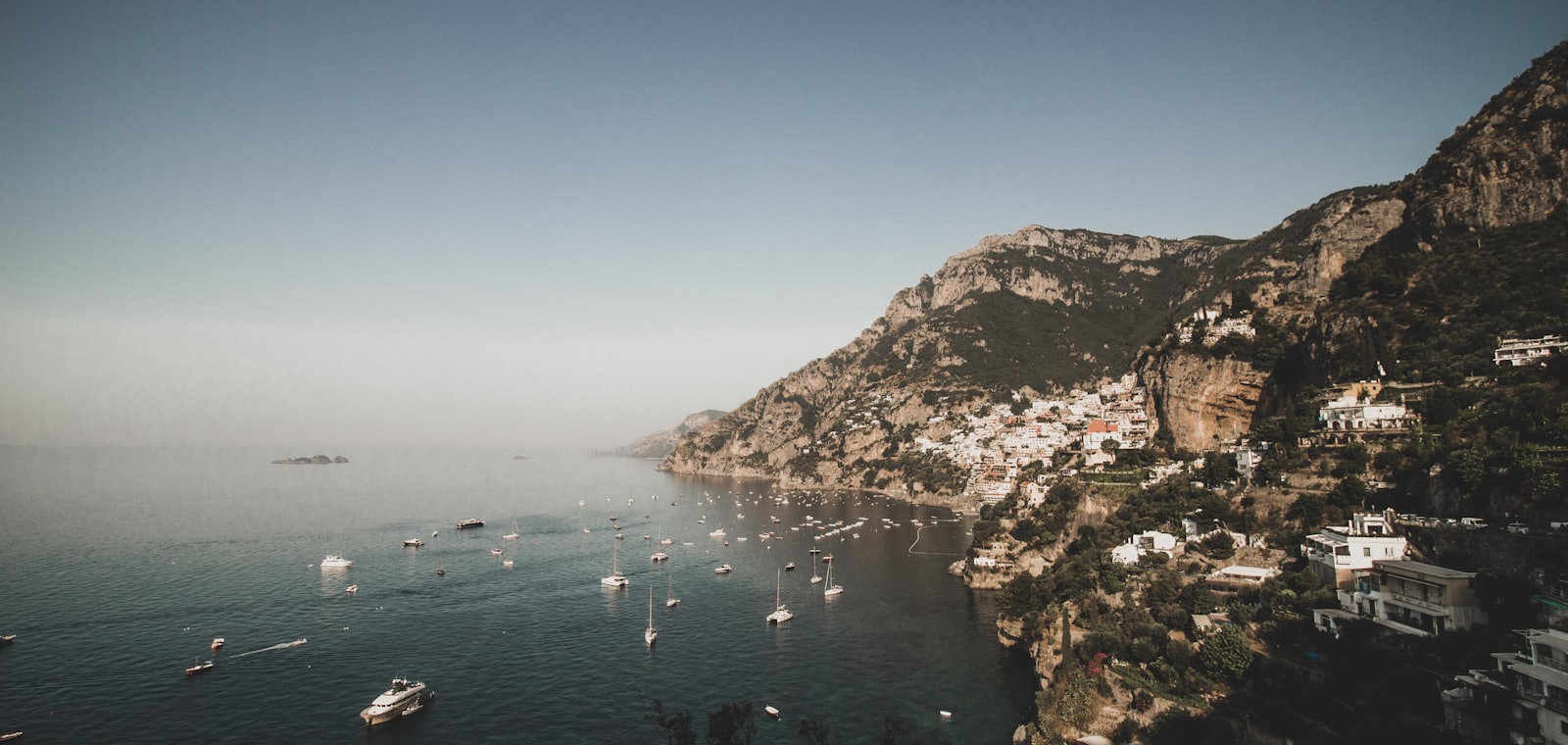
The mountain and coast roads demand extra attention. The Amalfi coast road (the SS163) is world-famous and narrow, with hairpin bends where buses and cars can barely pass each other. On busy summer days the traffic crawls along at walking pace. Expect to drive more slowly than you think and to face moments when you have to reverse to let a bus through. In the Dolomites the roads are wider and better maintained, but the changes in altitude and the number of bends keep your average speed low. So plan generously, and enjoy it rather than rushing.
Route 1: a road trip through Tuscany
Tuscany is the classic, and not without reason. You combine art cities, rolling hills, vineyards and medieval villages in an area compact enough to do in a week without driving endlessly every day.
A possible layout, with generous, padded times so you do not have to rush:
| Day | Route | Indicative driving time |
|---|---|---|
| 1 | Arrival Pisa, pick up the car, drive to Florence (explore on foot) | about 1 to 1.5 hours |
| 2 | Explore Florence further, leave the car parked | barely any driving |
| 3 | Florence to Siena, Chianti vineyards along the way | about 1.5 to 2 hours incl. stops |
| 4 | Siena to the Val d’Orcia (Pienza, Montepulciano) | about 1 to 1.5 hours, plus driving around |
| 5 | Val d’Orcia to San Gimignano | about 1.5 to 2 hours |
| 6 | San Gimignano, surroundings, back towards Pisa | about 1.5 hours |
The beauty of this route is that in every town you park the car outside the centre (think of the edge-of-town car parks of Siena or San Gimignano) and explore the core on foot. Between the destinations you drive over rolling country roads where the landscape itself becomes the destination. In the Val d’Orcia, deliberately set aside loose time just to drive around with no goal, because that is where Tuscany is at its most beautiful. For the choice between an automatic and a manual car on this hilly route, read our separate guide on renting an automatic or a manual.
Route 2: the Amalfi Coast and its surroundings
If you want sun, sea and spectacular views, the coast south of Naples is unbeatable. This is a route where the road itself is the attraction, but one that calls for patience and a cool head.
A possible setup:
| Day | Route | Indicative driving time |
|---|---|---|
| 1 | Arrival Naples, pick up the car, drive to Sorrento | about 1 to 1.5 hours |
| 2 | Sorrento as a base, day trip to Pompeii | about 1 hour there and back |
| 3 | The SS163 coast road: Positano, Amalfi, Ravello | expect half a day to a full day |
| 4 | Explore Ravello and surroundings at a relaxed pace | little driving |
| 5 | Optionally continue to the Cilento or back to Naples | variable |
On this route it is wise to choose a fixed base (Sorrento or a village just outside the busiest core) and make day trips from there, rather than dragging your suitcases around every night. The coast road itself is best driven early in the day, before the buses and the crowds. Bear in mind that parking in the coastal villages is scarce and pricey. Consider doing parts by local bus or boat and leaving the car in Sorrento on the busiest days. Those who prefer the calm of an island can apply the same approach to Sicily, with Catania as a starting point, Etna, Taormina and the baroque towns of the south-east.
What does a rental car cost in Italy and what should you watch for with insurance?
The price of a rental car in Italy swings sharply with the season, the region and how early you book. In July and August, and around the coast and islands, the rates are clearly higher than in the shoulder seasons.
The biggest financial surprises rarely lie in the rental price itself, but in the insurance and the deposit. At pick-up, the rental company blocks a deposit on your credit card, often a hefty amount. The standard package usually includes an excess that can run high in the event of damage. At the desk they often try to sell you expensive additional insurance. Always compare that in advance with a separate excess-waiver policy, which you can take out separately and which is usually far cheaper. Before you leave, calmly read up on how excess and deposit work exactly in our guide on excess and deposit, so that you do not buy an expensive package under pressure at the desk.
Now the practical matters in a row. Refuelling is best done by topping up yourself (“full to full”), because the rental company’s fuel package is usually more expensive. At fuel stations, watch for the difference between “fai da te” (self-service, cheaper) and “servito” (attended, more expensive). Parking with blue lines is paid (via machine or app), white lines are free but scarce, and yellow lines are reserved. For a complete checklist that applies to every country, our list of 12 tips will help you on your way. And if you want to compare another Southern European country, also read our guide on renting a car in Spain.
Which mistakes do travelers make most often in Italy?
Most problems arise from a handful of avoidable misunderstandings. Those who know them drive far more relaxed. These are the classics:
- Driving into the historic centre and picking up a ZTL fine, sometimes without realising it.
- Renting a car for a city break where it only gets in the way and costs money.
- Buying expensive insurance at the desk under time pressure without comparing beforehand.
- Losing the paper toll ticket and therefore paying the maximum rate.
- Accidentally driving into a yellow Telepass lane without a badge.
- Underestimating the driving times on coast and mountain roads and cramming the planning full.
- Not photographing the car all the way round at pick-up and return, leading to disputes about damage.
- Refuelling at the “servito” pump without noticing that it is more expensive than self-service.
Frequently asked questions
Do I really need to worry about ZTL zones?
Yes, this is the most important point of attention for anyone driving in Italy. The zones in historic centres are camera-monitored and fines come automatically, often only months later and, with a rental car, with an extra service charge. The solution is simple: do not drive into the old town centres and park on the edge.
Do I need an international driving licence in Italy?
With an EU or EEA licence you can drive in Italy without an international driving permit. Travelers from outside the EU usually need an International Driving Permit (IDP) alongside their national licence, so check the rules for your country before you travel. Do always bring your driving licence, ID or passport and the credit card on which the deposit is blocked to the desk.
Can I pay tolls with my bank card?
Yes, at almost all toll plazas you can pay with a debit or credit card. Choose the lane with the card symbol and avoid the yellow Telepass lanes, which only work with an electronic badge.
Is an automatic or a manual car handier in Italy?
That depends on where you are driving and what you are used to. On hill, mountain and coast roads with lots of bends, many people find an automatic more comfortable, but a manual is cheaper and more widely available. We go into it in more depth in our guide on renting an automatic or a manual.
When is it cheapest to rent a car in Italy?
Outside the high season, so roughly in the shoulder seasons rather than July and August, the rates are usually lower. Booking early also helps, certainly for popular regions like Tuscany, the Amalfi Coast and the islands, where availability quickly gets tight in summer.
Can I cross the border with an Italian rental car?
Often yes, but not always without conditions. Some rental companies only allow cross-border driving with prior permission or for a surcharge, and certain countries are excluded. If you want to drive from northern Italy to Slovenia or Switzerland, for example, ask in advance and have it put in your contract.
How do I avoid high fuel costs?
When booking, choose “full to full”, meaning pick up full and return full, rather than the rental company’s fuel package. Refuel yourself at the “fai da te” pump (self-service) instead of at “servito”, because the latter is attended and more expensive.
What do I do if I receive a fine after my trip anyway?
Do not panic, but do not ignore the letter either. With a rental car it usually goes through the rental company, who pass on your details and charge an administration fee. Check whether the fine is correct (date, place, vehicle), keep all your documents and pay or contest it within the stated deadline, because unpaid Italian fines can mount up.
Ready to compare?
Compare the prices of international rental companies in a few taps and book with peace of mind.
See the offer on Vrooem